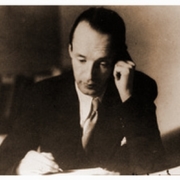
Photojournalism course held by Gianluca Pardelli (The Guardian and more) at Berlino Schule

Another edition of photojournalism and documentary photography course held by the Italian photojournalist Gianluca Pardelli is coming soon to Berlino Schule.

Starting on September 19th, the course is aimed to provide participants with a basic knowledge of the photographic discipline as one of the most efficient story-telling instruments. The course is structured in eight different units, including photographic excursions through the challenging human environment of Berlin.

After the excursions the participants will be involved in a post-processing workshop during which they will have the opportunity to learn more about editing techniques.

The lessons will be held every Saturday, 11-13, from September 19th till November 7th (8 lessons in total). The course will be entirely in English and opened to 12 people max. The price of the whole course amounts to 280€. It is possible to pay for the first lesson (20 €) and then decide and pay the rest.

For info and registration, please drop us a line at info@berlinoschule.com

The structure

After a general introduction to the topic and its dynamics, terminology and history (Unit 1) the course will then focus on fundamental elements of photojournalism and documentary photography such as the search for the subject (Unit 2), the relationship to be established with it (Unit 3), the complex task of building a captivating story (Unit 4) and the contamination and integration of other media within the photojournalistic practice (Unit 5). After the excursion (Unit 6) the participants will be involved in a post-processing workshop (Unit 7) during which they will have the opportunity to learn more about editing techniques. Finally, for those interested in pursuing a career in the field, a whole lecture will be devoted to photojournalism and documentary photography as a possible professional path within the current media industry (Unit 8).

The objective

During the whole duration of the course each participant will be encouraged to develop her/his own photojournalistic idea that will gradually take the form of the course completion project. All the participants’ works will be then showcased in a photography exhibition organized by Berlino Schule and Berlino Magazine.

#afghanistan

Un post condiviso da Gianluca Pardelli (@gianluca_pardelli) in data:

The teacher: Gianluca Pardelli

Born in Livorno, but Berliner by adoption, the Italian photojournalist Gianluca Pardelli collaborates with The Guardian and some other national and international magazines. He studied Slavic languages and cultures and specialized in reportages from Eastern Europe. In 2013 he travelled to North Korea, one of the most isolated and less understood countries in the world, to portray the daily life hidden behind the façade of the regime’s triumphal architecture. “North Korea can be considered as one of the few realities of the Eastern Block which survived to the fall of the Berlin Wall. It developed an independent form of totalitarism, much different from the one represented by Lenin or Castro”. Taking pictures of North Korean people is not common. “I travelled with an organized tour. It could have not been otherwise. The inhabitants are really keen on getting to know foreigners, but are scared of them as well. They are shy and happy at the same time. This is a strange but interesting mix for a photojournalist“.

#stalin

Un post condiviso da Gianluca Pardelli (@gianluca_pardelli) in data:

The course’s programm

Unit 1 – Introduction to photojournalism and documentary photography

Definition of photojournalism
Difference between photojournalism and documentary photography
Terminology and general glossary
Photojournalists are not photographers
Main actors in the world of photojournalism
A photojournalist’s credo. Cameras are like pens
Brief history of photojournalism
Display and first analysis attempt of a selected array of some major photojournalists’ works
Display and analysis of any work participants might want to present
Group brainstorming for photojournalistic ideas the participants will develop on their own as course completion project
Group discussion and evaluation

Unit 2 – In search of the subject

Defining the subject
Subjects and objects
Legitimacy of the subject
The search for the subject: a geographical and sociological study
Display and subject-focused analysis of well-known photojournalists’ works
Group discussion about past and present personal experiences related to the complex process of finding the right subject
Group discussion and update on the photojournalistic ideas the participants will develop on their own as course completion project

Unit 3 – Dealing with the subject

Photojournalist / subject relationship
Personal involvement with the subject
Keeping the right distance
Approaching the subject
Practical issues: language barriers, geographical distances, legal or bureaucratic obstacles and similar
Setting things straight
Reticence and mistrust
Honesty and clarity
Coping with the subject
Long-term vs short-term projects and implications
Following and accompanying. Semantic differences between the two terms and consequences on the everyday photojournalist-subject relation
Subject-driven reportages. When the subject takes the lead
Different photographic techniques for different subjects
Display and analysis of well-known photojournalists’ works focusing on the relationship with the subject
Group discussion about past and present personal experiences related to the photographer-subject relation
Group discussion and update on the photojournalistic ideas the participants will develop on their own as course completion project

Unit 4 – Building the story

From beautiful images to beautiful stories: the not-so-easy process of giving a journalistic meaning to a visually pleasant set of pictures
Beyond aesthetics: the relative importance of beauty in photojournalism and documentary photography
Finding the leitmotiv: how to follow the thin red line enlivening a project with meaningfulness
How images relate to each other
Same story, different focuses. Contest-conditioned narration
The underlying message and the different variables influencing its transmission
Text and images. Should a picture really speak for itself?
Photography in relation with other story- telling media: a comparison
Display and analysis of well-known photojournalists’ works focusing on the process of creating a story
Group discussion about past and present personal experiences related to the drafting of a photographic narration
Group discussion and update on the photojournalistic ideas the participants will develop on their own as course completion project

Unit 5 – Multimedia

Beyond photography, within photography: disturbance and integration
Brief overview of past and current tendencies
Pro and contra of the multimedia practice
How photography relates with other media: looking for harmony, avoiding mishmashes
Video and photography
Sound and photography
Literature and photography
Painting and photography
New creative horizons
Display and analysis of well-known photojournalists’ multimedia works
Group discussion about past and present personal experiences related to the use of different media other than photography
Group discussion and update on the photojournalistic ideas the participants will develop on their own as course completion project

Unit 6 – Excursion

Visit of a challenging human environment in Berlin
Shooting short sample reportages
On-the-ground practice of the notions learned in the previous units

Unit 7 – Editing workshop

Guided editing of the material shot during the excursion
Editing techniques
Lightroom and Photoshop basics
Captions and texts drafting
Group discussion about each participant’s work and editing performances

Unit 8 – Photojournalism as a career

Do you really want to be a photojournalism?
Motivations
A brief history of photojournalism as a professional path
The current state of photojournalism
The photojournalism market
Freelancer vs staff photographer
Funding your projects as a freelance
Kickstarter, Indiegogo and the crowd-funding market
Contests, grants and exhibitions
Getting published and self-publishing
Group discussion and analysis of some famous examples of self-funded projects
Group brainstorming on how to find financial solutions to fund the participants’ project
Group discussion and update on the photojournalistic ideas the participants will develop on their own as course completion project

Final Exhibition

Photojournalism and documentary photography course

When

dates to be announced


Where

Berlino Schule, Gryphiusstr. 23, 10245  Berlin-Friedrichshain.

Price

The course costs 280 €. Subscriptions to info@berlinoschule.com . You can also pay only for the first lesson (20 €) and then decide.

Max people 12

Info and registration

Please write an e-mail to info@berlinoschule.com with object “photojournalism”

Winter School! Study German at Berlino Schule for 9 days, while enjoying the magic Christmas markets

Berlino Schule’s Winter school: study German for 9 days, 230 €, 8 extra activities, Christmas markets and lots of fun!

Is there anything better than drinking a cup of hot chocolate while enjoying the magic Christmas atmosphere in Berlin? Would you like to spend some days in Berlin during the winter? Although the weather may not be great, Berlin is wonderful and full of lights. You can have the chance to stroll around the city, admire the cheerful Christmas markets and have a cup of Glühwein. Maybe after some German classes! Make your Winter great with our super-intensive German courses!
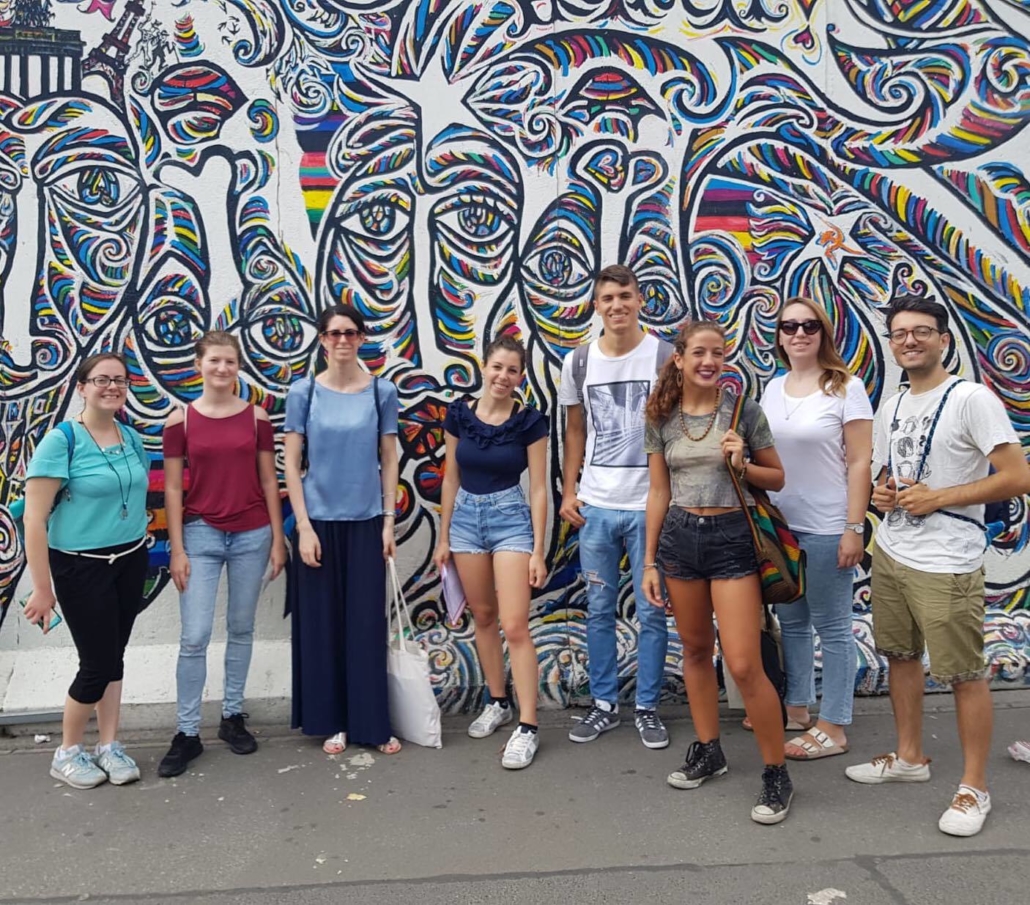
Berlino Schule

Berlino Schule Summer school 2019

Winter School

The Winter School of Berlino Schule is the study trip you are looking for. If you choose to register for our courses, you will have the possibility to attend super-intensive courses (5 hours per day, for 9 days) in the lively and international district of Friedrichshain.

That’s not all!

Our students will be offered the chance to join 8 extra activities (i.e. cineforum, walking tours, museums, conversation activities, etc).

Berlino Schule can help you find an accomodation in Berlin!

Would you like to spend some weeks in Berlin, but it is hard for you to find an accomodation? No panic! Berlino Schule has established some agreements with some landlords, who can provide you with the right accomodation (flats or rooms). In case you are interested, you can directly contact the school.

Wanna book the whole package?

You would like to attend a super-intensive course, but it is rather difficult for you to find an accomodation? We can provide you with an a single room in some hotels just nearby Berlino Schule, 2 weekly tickets included. Ask for a price quotation!

Great! But when?

From 13th December to 23rd December 2021, every day from Monday to Friday, 9:00 – 13:15.

Calendar

A1.1 13 DECEMBER – 23 DECEMBER (Monday-Friday, 9:00 – 13:15)

A1.2 13 DECEMBER – 23 DECEMBER (Monday-Friday, 9:00 – 13:15)

A2.1 13 DECEMBER – 23 DECEMBER (Monday-Friday, 9:00 – 13:15)

A2.2 13 DECEMBER – 23 DECEMBER (Monday-Friday, 9:00 – 13:15)

B1.1 13 DECEMBER – 23 DECEMBER (Monday-Friday, 9:00 – 13:15)

B1.2 13 DECEMBER – 23 DECEMBER (Monday-Friday, 9:00 – 13:15)

Price

230 € (8 extra activities included!)

I would like to join, but I cannot find the right course for me!

In this case, you can attend our intensive courses in the morning and afternoon, or our evening courses. Our intensive morning courses last 4 weeks. Classes take place every day, from Tuesday to Friday during the morning hours (either 8:45-11:15 or 11:40-14:10). Price: 192 € + 20 € application fee. The afternoon ones last 3 weeks or 5 weeks, from Monday to Friday, from 14:30-17:10 or 17:00-19:00. Price: 192 € + 20 € application fee. Our evening courses last 8 weeks. Classes take place twice a week, either on mondays and wednesdays or tuesdays and thursdays. Price: 240 € + 20 € application fee.

How much I would love to study German, but I cannot be there!

No worries! Berlino Schule offers lots of online courses (morning, afternoon or evening ones). Check them out here: online courses

Our teachers and our method

Certified teachers with a lot of experience in the teaching field. Every course is held in the target language, i.e. our teachers speak constantly the language that our students want to learn during the entire lesson. Our method is based on the belief that a total immersion is the most effective way to get better. In case you cannot assess your level, you can contact us and we can send you a placement test. At the end of the course, a certificate of attendance can be issued upon request.

Info and registration

Send us an email at info@berlinoschule.com
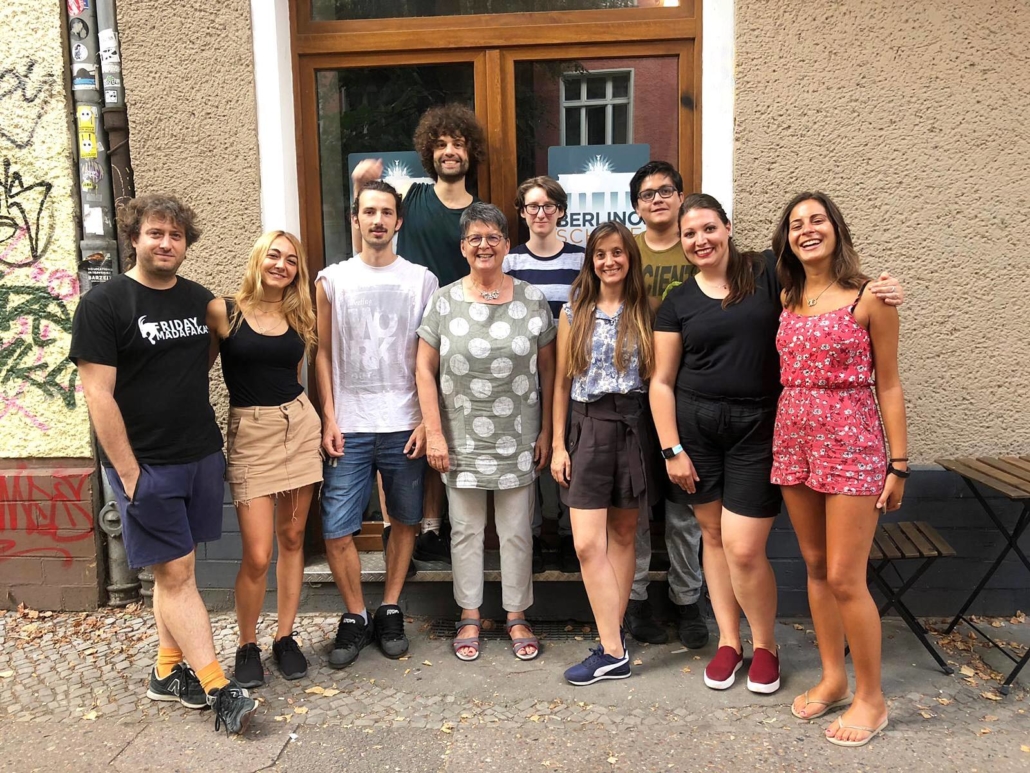
Berlino Schule students

Berlino Schule students

Berlino Schule

Gryphiustr. 23, 10245 Berlin – Friedrichshain

Phone: 0049 (0) 30 36465765

Website

info@berlinoschule.com

Facebook Page

Instagram Profile

Photo: PixelAnarchy Pixabay CC0
Party in Berlin? Then, you should learn these 10 typical German expressions

Berlin is famous for its alternative and excessive night life as much as Hamburg and Cologne. The international newspaper Deutsche Welle points out some words we should know to get ready for a night out in the German capital city.

FEIERABEND

Ready for a wild night in town? First thing first, it’s important to be stress-free from work. And Germans have the right word to mean the end of a working day: Feierabend, which literally means “holiday evening”. Unless you are a professional DJ, not every day can end with a party. But every Feierabend, is a good chance to join one.

AUFBREZELN

After work, a pit stop at home is what you need to start your night in the best way. Especially if you’re planning to go to an elegant and chic party. In this case, you should “dress up to kill”. Aufbrezeln just means this. High heels and a touch of lipstick for girls and a fresh shirt for boys are the necessary requirements. You never know where the night will end up. You could meet someone interesting.

VORGLÜHEN

Going out in group can be both funny and cheap. Having a drink or maybe two or three with friends is a good excuse to break the ice. Vorglühen is the German word for this. German bier might not always be loved by everyone but you have to admit that after one or two bottles you feel your feet above the ground. And ready to conquer the world.

WEGBIER

If you take a bier with you before the party, you can call it Wegbier or “take away bier”. In Germany, drinking bier on the streets is legal, as long as you behave and keep yourselves together.

AFTER-WORK PARTY

The number of after-work parties is increasing in the last years. What seems to be a retirement party, it is an actual after work party.

TÜRSTEHER

If you are going to a chic area of Berlin and Hamburg, it’s necessary to pass the bouncers which in German are called “Türsteher”. It literally means “the one who stays at the door” and somehow, surveils it.

AUF EX

If your German friends tell you to finish your drink “auf ex”, you better be ready to what is going to happen next. It believed to come from Latin but there is no document to prove it. Although, the translation is clear: kill your drink in one sip.

DÄMMERUNG

It’s the moment between day and night. And between night and day. So the beginning and the end of the day in one word. And if it was a cool night, it’s more likely that it will finish in the Dammerung.

NACHTSCHWÄRMER

The moment between twilight and down is when the night owls come out from their caves, offices and houses and head to bars, pubs and clubs. In one hand, residents complain about the screams and noise in the night. But in the other hand, bars’owners and taxi drivers thank the NachtSCHWÄRMER for their contribute to the city’s finance.

KATER

The term has two meanings and somehow, a bit ambuguous. Kater is the German version of ‘male cat’ but it means ‘hangover’ as well. The feeling that everyone knows after a wild night out. Also, Kater, comes from the Greek word ‘catarrh’. Which seems weird. The right English word is Hangover but, anyway, who cares about the meaning? Especially after an amazing night.


Winter school Berlino Schule

Winter School! Study German at Berlino Schule for 2 weeks, while enjoying the magic Christmas markets

Berlino Schule’s Winter school: study German for 2 weeks, 230 €, 8 extra activities, Christmas markets and lots of fun!

Is there anything better than drinking a cup of hot chocolate while enjoying the magic Christmas atmosphere in Berlin? Would you like to spend some days in Berlin during the winter? Although the weather may not be great, Berlin is wonderful and full of lights. You can have the chance to stroll around the city, admire the cheerful Christmas markets and have a cup of Glühwein. Maybe after some German classes! Make your Winter great with our super-intensive German courses!

Berlino Schule

Berlino Schule Summer school 2019

Winter School

The Winter School of Berlino Schule is the study trip you are looking for. If you choose to register for our courses, you will have the possibility to attend super-intensive courses (5 hours per day, for 2 weeks) in the lively and international district of Friedrichshain.

That’s not all!

Our students will be offered the chance to join 8 extra activities (i.e. cineforum, walking tours, museums, conversation activities, etc).

Berlino Schule can help you find an accomodation in Berlin!

Would you like to spend some weeks in Berlin, but it is hard for you to find an accomodation? No panic! Berlino Schule has established some agreements with some landlords, who can provide you with the right accomodation (flats or rooms). In case you are interested, you can directly contact the school.

Wanna book the whole package?

You would like to attend a super-intensive course, but it is rather difficult for you to find an accomodation? We can provide you with a single room in some hotels just nearby Berlino Schule, 2 weekly tickets included. Ask for a price quotation!

Great! But when?

From 9th December to 20th December, every day from Monday to Friday, 14:30-18:45.

Calendar

A1.1 9 DECEMBER – 20 DECEMBER (Monday-Friday, 14:30-18:45)

B1.1 9 DECEMBER – 20 DECEMBER (Monday-Friday, 14:30-18:45)

B2.1 9 DECEMBER – 20 DECEMBER (Monday-Friday, 14:30-18:45)

Price

230 € (8 extra activities included!)

I would like to join, but I cannot find the right course for me!

In this case, you can attend our intensive courses in the morning or our evening courses. Our intensive courses last 4 weeks. Classes take place every day, from Tuesday to Friday during the morning hours (either 8:45-11:15 or 11:40-14:10). Price: 192 € + 20 € application fee. Our evening courses last 8 weeks. Classes take place twice a week, either on mondays and wednesdays or tuesdays and thursday. Price: 240 € + 20 € application fee.

Our teachers and our method

Certified teachers with a lot of experience in the teaching field. Every course is held in the target language, i.e. our teachers speak constantly the language that our students want to learn during the entire lesson. Our method is based on the belief that a total immersion is the most effective way to get better. In case you cannot assess your level, you can contact us and we can send you a placement test. At the end of the course, a certificate of attendance will be issued upon request.

Info and registration

Send us an email at info@berlinoschule.com

Berlino Schule students

Berlino Schule students

Berlino Schule

Gryphiustr. 23, 10245 Berlin – Friedrichshain

Phone: 0049 (0) 30 36465765

Website

info@berlinoschule.com

Facebook Page

Instagram Profile

Read the Italian Version of the article!

Photo: PixelAnarchy Pixabay CC0
Friuli Venezia Giulia offers 30 grants for not Italian young people

The Italian region of Friuli Venezia Giulia gives an opporturnity to attend in a innovative workshop studying Italian language and it can’t be missed. It offers 25/30 grants to not Italian young people in order to promote it as tourist destination, including Italian language lessons for intermediate level. Don’t miss the call!

Guidelines and selection criteria – 25/30 grants

The initiative called #CuriosiFVG2019-HANDS&BRAIN&HEART International Workshop aims to promote Friuli Venezia Giulia as a tourist destination able to offer a wide range of first-class tourist services to international visitors.
The project involves in giving a group of 25/30 young people (aged 22-35) from other 12/15 EU/EEA countries, Eastern Europe, Russia, Balkans, China, who already have a good knowledge of Italian (at least B2) and who are already working in the fields of international tourism, commerce, or in education, the opportunity of a twenty days full-immersion in Friuli Venezia Giulia to enable them to become original FVGgreeters once back in their home countries. Here you’ll find a welcoming environment, quality of life and beauty that are going to make you feel home.
The motto “Hands&Brain&Heart” represents the history of a strong working population from poor agriculture, from years of emigration to first level industrial innovation; together with unpolluted landscapes and people with warm hospitality and being able to share emotions.The experience consists in different activities and visits, held mostly in Italian.

Arrival: Wednesday 25th June 2019
Departure: Sunday 14th July 2019

The workshop is to be followed in its entirety with activities taking place every day, including Saturdays.
The following are all integral parts of the workshop: visits to various places in the region alternating with activities such as role playing in which the participants will play leading roles; seminars with experts and representatives from the regional worlds of culture and economics; studies of FVG’s cultural and artistic heritage and its socio-economic aspects; work experience in local businesses (companies working in the sectors of tourism, local food products, the wine industry and manufacturing for export); and in addition, some Italian language lessons to improve participants’ knowledge of Italian.
The participants will be expected to become storytellers and instagrammers (@curiosifvg) to describe their experience by activating #curiosiFVG2019.
By using different social media they will further enhance the value of their experiences while living them, using Italian, English and their own mother tongues.

Click here to be redirected to original website and find the APPLICATION FORM – DEADLINE 11 MAY 2019, BY E-MAIL

Selection of partecipants

25/30 participants will be selected coming from EU countries as well as from Russia, Belarus, Ucraina, Balcan area countries, Cina, and others with specific economic or cultural contacts with the Friuli Venezia Giulia region.
Prerequisites: age between 22 and 35; good knowledge of the Italian language (European Framework B2 level, with certification); good knowledge of English; university student or university graduate; work experience, especially in the area of tourism and foreign cultural and exchange or import/export with specific interest towards the Friuli Venezia Giulia region.

Clicca qui per essere reindirizzato alla pagina ufficiale per trovare  il modulo d’iscrizione

Location

The organization of the whole educational experience has been entrusted to the Istituto Regionale di Studi Europei di Friuli Venezia Giulia (IRSE) with its centre in Via Concordia 7. Pordenone, which offers the availability of: teaching rooms with the latest technological equipment, a WI-FI area, auditorium, self-service restaurant, library and video library.All general expenses are paid by the promoters and consist of: Board and Lodging, all the teaching activities, day trips and guided tours. Overnight accommodation with breakfast is arranged in a hotel near the course centre. Midday meals are also included (at the self-service in the course centre or during day trips). Some of the evening meals are also included.

Travelling expenses

All travelling expenses must be paid personally by participants, or by their employers or associations or others.
Health assistance: all participants must be in possession of the European Health Insurance Card (EHIC), or a similar health insurance policy.

Visa regulations

To be able to benefit from the grant, selected participant must apply to the Consular Italian Authority for a Visa, if requested for their countries. L’IRSE will provide necessary documentation upon request.

AFTER CAREFUL STUDY OF THESE NOTES, CANDIDATES MUST FILL IN THE APPLICATION FORM AND SEND IT IN WITHIN 11 MAY, 2019 BY E-MAIL TO IRSE@CENTROCULTURAPORDENONE.IT

THE APPLICATION FORM MUST INCLUDE A DETAILED CURRICULUM VITAE WRITTEN IN ITALIAN AND A LETTER OF INTRODUCTION FROM AN EMPLOYER OR A UNIVERSITY PROFESSOR (IN ENGLISH).

ACCEPTANCE will be communicated before May 25th, 2019

Click here for the original website


Lipsi, when DDR created a new dance to stop rock’n’roll

Listening new rock bands was actually impossible for youngsters who lived in Soviet bloc

All western bands were strongly censored by regime, above all rock’n’roll was not tolerated at all. Although listening to Elvis, Rolling Stones or Beatles was very hard matter, the ban was bypassed and their music albums came into DDR, getting really famous. Soviet party’s chiefs worried about the fact that youngers were listening this music, so they decided to think a new dance up. The newborn dance was created to be catched on them in order to eclipse the success of rock’n’roll: Lipsi was born.

Soviet reply to decandent and vulgar Western rock’n’roll

Soviet leaders felt disconcerted by dances which spread out since the end of 50s. They were the opinion that Elvis’ basin movements were almost pornographic, and besides, a tête-à-tête dancing between teenagers was a not- well-identified danger for social order. In order to prevent that this new kind of music could keep influence on DDR teenagers, Soviet leaders were determined to compose a new music and dance, both were suitable to the (chaste) education of Socialist youngsters. About Lipsi, René Dubianski composed its music, whereas dancing was created by Christa and Helmut Seifert dancers. As reported by J.Elke Ertel in his book entitled “Walled In – A West Berlin girl’s journey to freedom, the name was not choosed by chance. All three authors came from Lipsia which was obviously situated in Soviet bloc. Adapting the latin name of the city, Lipsiens, they created an original name: without good reason, they actually thought that the final “i” would have given an “american” and new-fashioned guise, more fashionable for teenagers. Once music was composed and dance was created, the strict Soviet censorship let pass it: challenge against capitalist West could be begin on the dancing floor too.

A guidelines to dance Lipsi, for perfect party in Eastern German style

Surely, you are now curious to know how to dance Lipsi that is essential to organize a DDR themed party. The lyrics, composed by Dublansky and reported by Anna Funder in C’era una volta la DDRsaid: «These days all the youngsters dance Lipsistep, just it; These days all of them want to learn Lipsistep: it is hip rhythm! Rumba, Boogie and Cha Cha Cha are old-fashioned; out of the blue, a new rhythm has come from nowhere and it is about to be still». The piece is in 6/4, as it was a speedy waltz. The Seiferts created a very simple choreography which is quite similar to a rumba blended with waltz as defined by Ertel, so as the youngs could learn quickly. The most curious aspect was that any kind of basin movements was strictly forbidden, only chest movements were permitted. Dancers almost never moved close to each other, staying at safe distance: all that contributed to create an “innocent” choreography. But even though it was beaten the drum for it, Lipsi didn’t hit the big time. Socialist teenargers continued to prefer Western rock’n’roll with its own unfettered rhythm and, listening to Lipsi, we can’t argue with them. If you want to learn more about history of this questionable dance and everyday life during those years, you could visit DDR Museum in Karl-Liebknecht-Strasse, Berlin.

Cover image: A Lipsi step – Screenshot from Youtube’s video


Johann Trollman, the Sinti boxer who challenged the Nazi regime

Who is Johann Trollman?

Johann Trollman was a Sinti boxer who started his career during the Nazi regime. On the ring, he used to wear a pair of shorts on which the tiny word “Gypsy” had been sewed. Trollman was born in 1907 in Hannover, it was also known as “Rukeli,” which means “tree,” due to his prominent figure and his curly hair. Although he was a professional boxer, he has always been branded as “nomad.” Trollman was known for his original way to fight like a dancer. Disparaged by the press because of his approach to competitors, he was exempted from the Olympic team of ’98 beacuse of his gipsy origins.

He stepped into the ring dressed up as a true Arian to mock the regime

When Hitler rose to power, Germany’s boxing clubs were reorganized, and non-Arian fighters were excluded. To obtain the middle weight title, Trollman had to fight against the German Adolf Witte. Even if he won the match, Nazi authorities stripped him of his title eight days later and gave it to Gustav Eder. Trollman took up the challenge and fought against the new champion. However, German authorities forced Trollman to change his original way of fighting. As a response, the gypsy boxer arrived on the ring after having dyed his hair blonde and covered his body with flour, to mock the regime.

The Sinti boxer had to pay up for teasing Nazis

Due to Gustav Eder’s match, Trollman lost both his chance to regain the title and his fighting license. Furthermore, his failure forced him to work as a waiter for a living. After being threatened, the Sinti boxer had to leave his family and underwent a sterilization. In 1942 he was arrested and forced to join the eastern front. Later, he was deported in Neuengamme, a concentration camp where German soldiers forced him to make illegal fights over the night. Trollman was moved again into Wittenberge, where he had his last illegal match. His victory stirred up general unrest among German soldiers, who killed him. Today the German boxing federation recognizes his value and apologizes to the family for what happened during those years. 

Kokeshi75 CC0

Hermannplatz returns to its former beauty thanks to David Chipperfield

The department store located in Hermannplatz (Berlin – Neukölln) will be redesigned by David Chipperfield

The legendary building located in Hermannplatz, which dates back to the 1920s, will be knocked down and rebuilt by David Chipperfield. The palace can be found between Kreuzberg and Neukölln. In 1929 Karstadt wasn’t just a shopping center: it represented also a tourist attraction in the Weimar Republic. After the Second World War, the building was destroyed and later on built up. Today the facility belongs to an Austrian billionaire called Renè Benko. Now the billionaire wants to restore Karstadt’s builing and bring it to its former beauty. 

Karstadt from the 1920s to the 1950s

In the past, the Art Decò building stood on Hermannplatz, extending over 32 meters with 7 floors. The whole palace was made of limestone. Karstadt recalls New Yorkers’s store. During the 1940s the façade was destroyed. In the second half of the 20th century, the building has been refurbished. It didn’t, however, regain its glory.

David Chipperfield’s project

The British architect David Chipperfield will handle Karstadt reconstruction project. His aim is to give a modern interpretation of the building. As planned for the project, two columns will be reactivated. Furthermore, an observation deck will be added. Both in the first and second floor, a day care and a library are to be put up. The new structure will appear smaller than the older one even though gyms, offices and a covered market won’t be missing. On the top of the building, a restaurant and a hotel will be added. Construction works will last 3 years, starting from 2021. 

Photo: © Visualisierungen von der Vision des Projekts am Hermannplatz. Das Copyright der Renderings liegt bei David Chipperfield Architects.


How Dresden was rebuilt by its citizens, after being bombed in 1945

Dresden after the Second World War

February 1945. A few months before the end of Second World War, the city of Dresden was bombed. As a result of the conflict, Germany was occupied by Soviets. Just right after the Reunification of Germany and the Fall of the Berlin Wall, a tough work of reconstruction took place over the country. A group of Dresden citizens cleaned the rubble up and a lot of blueprints were drawn up thanks to the work of architects and urban planners. People wondered how the new city could appear and how it could be possible to rebuild it. In 1993, refurbishing works started in Dresden; almost ten years later, in 2005, the Lutheran church called Frauenkirche – which was considered the emblem of the city – returned to its people. Its wreckage has always represented a memoir against the war. Thanks to the citizen’s efforts, several important buildings were restored such as the Zwinger Palace and the Semper Opera House.

What happened during the bombing period

In February 1945, both Britain and U.S. Armies decided to drop two pounds of explosive and a thousand firebombs over Dresden. The air strike lasted two days no stop. The city of Dresden was destroyed by the flames. According to historians, 370000 people passed away during the attacks. The attacks in Dresden were known for their atrocity and then depicted in a novel called “Slaughterhouse-Five” by Kurt Vonnegut. 

Women called “Trummer Frauen” rebuilt Germany

The “Trummer Frauen” were a group of women who helped with the reconstruction of German destroyed cities. War reduced men’s workforce: husbands and sons died or never returned home. On their behalf, women took the reins of Germany’s cities restoration, being almost 7 million more than men. With their help, women freed cities from debris. The age of the so-called Trummer Frauen goes from 15 until 50. Moreover, allied powers issued an order for women to help get rid of rubble. A lot of volunteers joined and supported them. In different German cities like Berlin, Leipzig, Magdeburg e Nürnberg set out a plan for rubble removal. In Dresden, almost 492 men and 512 women took part in disposal operations. At the end of the 1946, the number of working women reached 580.

Photo: Wikilmages CC0

Nabokov lived in Berlin for 15 years, but he never integrated in the German society

Vladimir Nabokov moved to Berlin in 1922 and lived there for 15 years

Nabokov’s family moved to Berlin in 1920. In those days, many people left Russia because of the Civil war, and from 1922 to 1923 more than 300.000 Russians reached Berlin. Immigrats was mainly concentrated in Wittenbergplatz and Charlottenburg (this latter was ironically called Charlottengrad). Vladimir Nabokov was among those who arrived in 1922. His arrival was quite tragic: after just a few weeks, his father passed away while trying to save Pavel Miliukovl, a notable Russian politician, during an attack.

Life in Berlin

Nabokov spent his time within the Russian community, as he has never been able to integrate in the German society. In fact, he then admitted he could not stand Berlin. “Upon moving to Berlin I was beset by a panicky fear of somehow flawing my precious layer of Russian by learning to speak German fluently…”, as he wrote in his work Strong opinions, published in 1973. He stayed in Berlin till the late 1930s, when the rise of the Nazi party pushed him to move to the United States.

Literary debut

In Berlin, Nabokov wrote his first works in Russian and published them in some newspapers, which were printed by some Russian immigrants. His first book (Korol Dama Valet) was published by a Russian editor. He also translated in English a great number of books. In fact, the cultural hybridization shines through them: even though, those books belong to the English literature, styles and themes are typical of the Russian culture.

A guide to Berlin

A Guide to Berlin is one of those. This short novel, published in 1925, describes Berlin from the inside perspective, through the eyes of an unidentified character. The novelist believes in how important it is to immortalize everyday life: “So that could be reflect in gentle lens of future times”. The guidebook offers few reference points, which are concretely recognizable: narration is subjective and far away from a guidebook-style.

Here you can download Nabokov’s short novel

Photo: A Pictorial Biography, compiled and edited by Ellendea Proffer (Ann Arbor: Ardis Publishers, c1991).