Intensive, afternoon, evening, private and Skype classes: Berlino Schule’s German courses – Fall 2018

Life is not too short to learn German

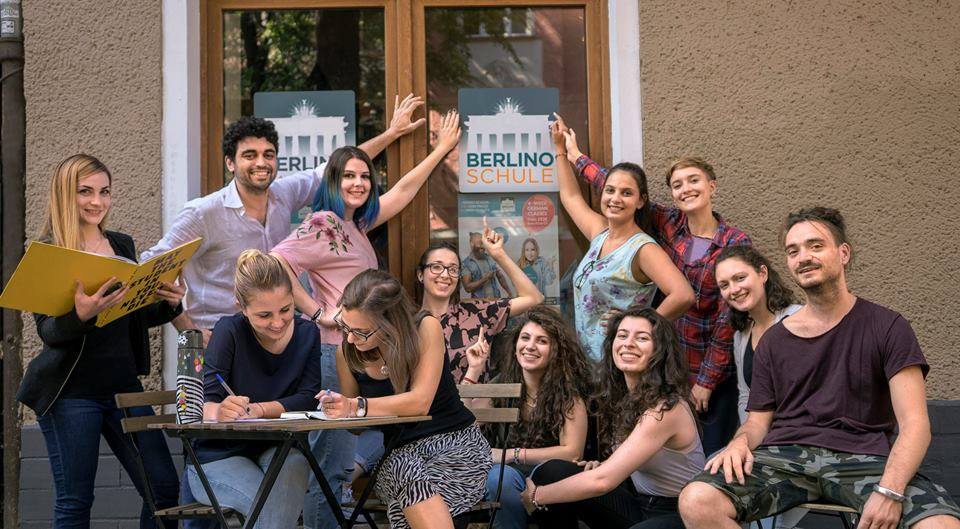
Is it your first time in Berlin, or you have been living in Berlin for quite a lot of time now, but you still have the feeling you cannot speak German fluently? Don’t worry. You are neither the first nor the last to experience this. That’s why it is extremely important to rely on the right school. Berlino Schule has the best quality-price ratio: it can provide you with a proper language education, with qualified and German native teachers from just 4€/hour*. Don’t miss the opportunity to learn “this (not) impossible” language in an international environment!

Berlino Schule provides students with three kinds of German course: intensive (morning and afternoon), extensive (evening) and private lessons.

Our German intensive courses

Intensive German courses at Berlino Schule last 4 weeks, for a total amount of 48 hours: classes take place 4 days a week (from Tuesday to Friday), 3 hours per day, from 8.45 to 11.15 or from 11.40 to 14.10. Therefore, a new afternoon intensive courses will be starting on 27th November and will then last till 21st December (from Tuesday to Friday, 14:45-17:15).

Our next German intensive morning courses

A1.1 6 NOVEMBER – 30 NOVEMBER (Tue-Fri 8.45 -11.15)

A1.2 6 NOVEMBER – 30 NOVEMBER (Tue-Fri 11.40-14.10)

A2.1 6 NOVEMBER – 30 NOVEMBER (Tue-Fri 8.45 -11.15)

A2.2 6 NOVEMBER – 30 NOVEMBER (Tue-Fri 11.40-14.10)

B1.1 6 NOVEMBER – 30 NOVEMBER (Tue-Fri 8.45 -11.15)

B2.1 6 NOVEMBER – 30 NOVEMBER (Fue-Fri 11.40 -14.10)

Our next German afternoon intensive course

A1.1 27 NOVEMBER – 21 DECEMBER (Tue-Fri, 14:45-17:15)

Our German evening courses 

Evening German courses are starting on 5th November at Berlino Schule and they will last 8 weeks, for a total amount of 48 hours: classes will take place 2 days a week (Monday and Wednesday or Tuesday and Thursday), 3 hours per day, from 19.15 to 21.40. Price: 240 + 20 euro registration fee (valid for one year).

Our next German evening courses

A1.1 6 NOVEMBER – 20 DECEMBER (Tue and Thu 19.15 – 21.40)

A1.2 5 NOVEMBER – 19 DECEMBER (Mon and Wed 19.15  – 21.40)

A2.1 5 NOVEMBER – 19 DECEMBER (Mon and Wed 19.15 – 21.40)

A2.2 6 NOVEMBER – 20 DECEMBER (Tue and Thu 19.15 – 21.40)

B2.2 5 NOVEMBER – 20 DECEMBER (Mon and Thu 19.15 – 21.40)

C1.1 5 NOVEMBER – 19 DECEMBER (Mon and Wed 19.15 – 21.40)

Skype/private classes

We want learning to be accessible to everyone, even if you don’t live in Germany or don’t have the time to come to our school. Our individual and Skype classes are made up for beginners (A1.1) and advanced learners (C1). An attendance certificate will be given to you at the end of your eLearning classes. If you want to take individual classes, no previous knowledge is required. Our flexible schedule will meet your specific linguistic needs and working hours. The attendance will be define with the school.The price is 28 € per hour (45 minutes).

Berlino Schule’s whole calendar from December to March

German intensive courses starting from December (3 weeks, 2h40 per day)

A1.1 3 DECEMBER – 21 DECEMBER (Mon-Fri 11.40 – 14.20)

A1.2 3 DECEMBER – 21 DECEMBER (Mon-Fri 8.45 -11.25)

A2.1 3 DECEMBER – 21 DECEMBER (Mon-Fri 11.40 -14.20)

A2.2 3 DECEMBER – 21 DECEMBER (Mon-Fri 8.45 -11.25)

B1.1 3 DECEMBER – 21 DECEMBER (Mon-Fri 11.40 -14.20)

B1.2 3 DECEMBER – 21 DECEMBER (Mon-Fri 8.45 -11.25)

B2.2 3 DECEMBER – 21 DECEMBER (Mon-Fri 8.45 -11.25)

German intensive courses starting from January

A1.1 8 JANUARY – 1 FEBRUARY (Tue-Fri 8.45 -11.15)

A1.2 8 JANUARY – 1 FEBRUARY (Tue-Fri 11.40 -14.10)

A2.1 8 JANUARY – 1 FEBRUARY (Tue-Fri 8.45 -11.15)

A2.2 8 JANUARY – 1 FEBRUARY (Tue-Fri 11.40-14.10)

B1.1 8 JANUARY – 1 FEBRUARY (Tue-Fri 8.45 -11.15)

B1.2 8 JANUARY – 1 FEBRUARY (Tue-Fri 11.40 -14.10)

 C1.1 8 JANUARY – 1 FEBRUARY (Tue-Fri 8.45 -11.15)

German evening courses starting from January

A1.1 7 JANUARY – 27 FEBRUARY (Mon and Wed 19.15  – 21.40)

A1.2 8 JANUARY – 28 FEBRUARY (Tue and Thu 19.15h  – 21.40h)

A2.1 7 JANUARY – 27 FEBRUARY (Mon and Wed 19.15 – 21.40)

A2.2 7 JANUARY – 27 FEBRUARY (Mon and Wed 19.15 – 21.40)

B1.1 8 JANUARY – 28 FEBRUARY (Tue and Thu 19.15h  – 21.40h)

C1.1 8 JANUARY – 28 FEBRUARY (Tue and Thu 19.15 – 21.40)

German intensive courses starting from February

A1.1 5 FEBRUARY – 1 MARCH (Tue-Fri 11.40 -14.10)

A1.2 5 FEBRUARY – 1 MARCH (Tue-Fri 8.45 -11.15)

A2.1 5 FEBRUARY – 1 MARCH (Tue-Fri 11.40 -14.10)

A2.2 5 FEBRUARY – 1 MARCH (Tue-Fri 8.45 -11.15)

B1.1 5 FEBRUARY – 1 MARCH (Tue-Fri 11.40-14.10)

B2.1 5 FEBRUARY – 1 MARCH (Tue-Fri 11.40-14.10)

German intensive courses starting from March

A1.1 5 MARCH – 29 MARCH (Tue-Fri 8.45 -11.15)

A1.2 5 MARCH – 29 MARCH (Tue-Fri 11.40-14.10)

A2.1 5 MARCH – 29 MARCH (Tue-Fri 8.45 -11.15)

A2.2 5 MARCH – 29 MARCH (Tue-Fri 11.40-14.10)

B1.1 5 MARCH – 29 MARCH (Tue-Fri 8.45 -11.15)

B1.2 5 MARCH – 29 MARCH (Tue-Fri 11.40-14.10)

German evening courses starting from March

A1.1 5 MARCH – 25 APRIL (Tue and Thu 19.15  – 21.40)

A1.2 7 MARCH – 24 APRIL (Mon and Wed 19.15 – 21.40)

A2.1 5 MARCH – 25 APRIL (Tue and Thu 19.15 – 21.40)

A2.2 4 MARCH – 24 APRIL (Mon and Wed 19.15 – 21.40)

B1.1 4 MARCH – 24 APRIL (Mon and Wed 19.15 – 21.40)

B1.2 5 MARCH – 25 APRIL (Tue and Thu 19.15 – 21.40)

Our teachers and method

The courses are held by teachers with certified experience in the language teaching field. Each class will be held in the target language so that students can learn more effectively. At the end of the course a certificate of attendance will be released on demand.

Info and registration

Send an email to info@berlinoschule.com or contact us at: 030 36465765 and we will reply with all the information you need. Check also our website to know more about Berlino Schule.

Where we are

Gryphiusstraße 23, 10245 Berlin

next stops: Samariterstraße, Ostkreuz

The German language is becoming easier and easier thanks to foreigners

The Germans and their language

Apparently, German people speak their language in a wrong way, grammatically speaking. The reason is quite simple: they want to simplify it. Mark Twain wrote in his book A Tramp Abroad: “A gifted person ought to learn English in thirty hours, French in thirty days, and German in thirty years.” It’s widely believed that the German language should be in a certain way renewed and refreshed. So, what’s going on with German? In 2008, two thirds of Germany’s inhabitants said that the quality of their language was becoming lower and lower: in fact, people tend to read less. Not to mention, the inexorable process of anglicisation.

Is Hochdeutsch disappearing?

The term Hochdeutsch refers to the most prestigious variety of German, the one without dialect and regional expressions. Needless to say, the spoken language – more flexible and open to cultural and linguistic transformations – easily removes the grammar’s barriers, typical of the written German. In the spoken German, not only the genitive case completely disappears, being replaced by different prepositions, but also word endings, concords and formal cohesion of the sentence inexplicably vanish. Grammatical structures of migrants’ languages, such as Turkish or English, tend to influence the language.

German and multilingualism

Language transformations are due to social changes: believe it or not, an increasingly growing process of immigration leads to a vast multilingualism. This actually means that the language is sensitive to social transformations and changes. In Berlin there are people from 189 different countries, and this contributes undoubtedly to the phenomenon of Multi Kulti Deutsch (multicultural German). There’s a good chance that “the systematic mistakes of today are the new rules of tomorrow”, as Rudi Keller, German linguist, states. To sum up, foreign languages affect inevitably national languages, and schools and universities should make aware of this kind of phenomenon.

Not only in Germany! 10 German words which are commonly used also in other languages

The German language: not as foreign as we think

It’s a fact, that learning German is not easy at all. Anyone who wants to learn this language must deal with a complex grammar, the existence of three genres (masculine, feminine and neutral), the length of the words and the basic unfamiliarity of each sound. In order to make the learning of German easier, we may remember that many words from German are actually used globally as an important part of the common language. For example, look at the following terms: Müsli, Strüdel, Kitsch, Bunker or Realpolitik. As we can see, the Teutonic influence is quite obvious in many different fields: food, culture, military or politics. Now, let’s focus on the most commonly used worldwide German words:

Hinterland

Literally meaning “the land behind”, is a common word in English, French, Spanish and Italian. Hinterland stands for “backcountry” or “a remote area of a country away from the city centre influenced by economics, society and culture”. For example, in Italy we often hear of “hinterland milanese”.

Schadenfreude

Common word used in English to express “joy” or “satisfaction” for one’s misfortunes. The Italian translation is “gioia maligna”.

Kindergarten

Literally “children’s garden”, it can be used in English as a synonym of “nursery school”.

Zeitgeist

This is a worldwide term used to express “the spirit of the time”. The expression comes from philosophy to indicate the ideal climate, culture and spirit (considered as characteristic of an era).

Wanderlust

Literally meaning “desire of walking” is commonly used in English in order to express “the craving for travel”.

Leitmotiv

Literally “guiding reason” is a global word which indicates “a motif or constant aspect of a literary or musical work” but also of “activities, manifestations and different behaviours”. Apart from the musical field, it has also become common to others.

Wunderkind

In English “wonder/prodigious child”.

Doppelgänger

It means in English “body double/alter ego”.

Spiel

Literally “play or game”. This term is used in English with the meaning of “eulogistic speech” or “long and boring speech”.

Delicatessen

Commonly shortened in Deli in English, Delicatessen means “culinary specialities shop”. The German word Delikatesse, which stands for “deliciousness”, derives from délicatesse, or “delicacy”.

Documentary Filmmaking, in Berlin the new course by the Daring House Film Production

Create your own short documentary in six classes!

Berlino Magazine and Berlino Schule in collaboration with Daring House Documentary School are hosting a basic module about Documentary filmmaking. On 2th October there will be a free presentation of our Filmmaking course. The workshop will then continue with classes on Tuesdays, from 20:00 till 21:30 for 5 weeks at Daring House Studio, Auguststraße 88, 10117, Berlin-Mitte.

Course objectives

Now more then ever digital technology allows people to express their own vision of reality – and this is what our course is about. In a set of structured meetings, attendees will learn how to find, shoot and edit a story, in close interaction with an enthusiastic group of people. The films will then be presented at a short documentary film festival held in Berlin, with an awards ceremony and attendance certificate for everybody.

The course will let you create your film FOR REAL. During classes, you will use your own camera and have a look at videos of nice and established filmmakers.

The module is for those who want to try their hands at filmmaking as a hobby or are considering making it a profession; for journalists wanting to expand their audiovisual skills; for film-enthusiasts wanting to learn the process of filmmaking.

The course will be held in English and the instructor also speaks fluent German, Italian and Spanish.

Program

Class 1 – Filmmaking 101 – 2.10.2018, 20:00-21:30 – FREE TRIAL LESSON.

– What is a documentary? Break free from the accepted rules and create your “own” story.
– Tragedies, illnesses, catastrophes and sad people. Why you should try (also) to tell happy documentary stories.
– How are documentary stories told? The different styles of storytelling: real life, interviews, with or without a host, mockumentary.
– Any story is a good story if well told. The approach to find a story and the importance of personal feelings in storytelling.
– What do I need to shoot: camera/smartphone, pc.
– Writing or not writing? How far should filmmakers go with their script.

Class 2 – Working with your story – 09.10.2018 – 20:00-21:30

– How to tell if a story is worth being told
– Red flags 1: stories you should avoid.
– Red flags 2: people you should avoid.
– How too approach a person to shoot a documentary.
– Shooting: how to make your story appear natural.
– The “fly on the wall”: how to disappear behind the camera.
– Emphatic listening and the key to good interviews.

Class 3 – Hands on your camera – 16.10.2018 – 20:00-21:30

– Basics of smartphone cinematography. How to hold a smartphone camera and how to operate it.
– Basics of camera cinematography avoiding zoom and multi-focal lenses.
– Audio: why a good sound is more important that good images.
– Shooting with natural light.
– Creating a shooting frame: concepts of shooting aesthetics.
– Project pitching! Suggesting stories and creating shooting teams.

Class 4 – Editing – 30.10.2018 – 20:00-21:30

– Basics of editing: please start telling your story from second 1.
– Why knowing editing is important to shoot good images.
– Editing with free programs.
– Editing with professional programs.
– Documentary dramaturgy: please don’t bore your audience.
– Creating emotions with editing. How to play an audience like an instrument.
– “Kill your darlings”: why your personal shooting experience is different than the story you are telling.
– Working with music: from Dogma to La La Land.

Class 5 – Rough-cut workshop – 06.11.2018 – 20:00-21:30

– Review of the projects and tips to make them even better.
– Closing a project: why “films projects are never finished, but abandoned”.
– Basics of subtitling.

Class 6 – How to call yourself a filmmaker and closing the final cut – 11.12.2018 – 20:00-21:30

– Review of the projects and tips to make them even better.
– Dreaming about a filmmaker career? Here’s what you need to know.
– Don’t trust the festival. A quick guide to festival submissions.
– “We are all dead” and other depressing statements by filmmakers and artists in general.
– The documentary film industry. How to have fun making film art and live happily.
– Preview of the following modules.

Price

The course costs 175€.

The teacher

Stefano Casertano is an award-winning filmmaker living in Berlin since 2006, CEO of the production company Daring House. His last film as director “People of Love and Rage” won the Eindhoven FIlm Festival and the Special Mention of the Jury at the Rome Independent Film Festival. As a producer, his animated short “The Ballad of the Homeless” screened at the Cannes Film Festival, won a Nastro d’Argento, was a candidate at the David di Donatello and won the LA Short Fest, being shortlisted for the Academy Awards. Stefano is currently producing his fourth documentary “Eighteen Penalties” about the story of the football matches between Italy and Germany produced by Istituto Luce and Lichtblick Film, with the support of the Italian Ministry of Culture and the German Film Funding Institute. Stefano also serves as producer and filmmaker for video productions for media outlets such as El Paìs, Sky, La7, RBB and Rai. Before embarking in his film career, Stefano completed an MBA in Media and Communication at Columbia University in New York and a Ph.D. “Magna cum Laude” in International Politics at Potsdam University in Germany. He has been international correspondent for Linkiesta.it, Finanza & Mercati and Pagina99, and his articles have appeared on World Affairs, Project Syndicate and RealClearWorld.

Advanced modules to be scheduled:

– Documentary filmmaking advanced module

– Immerse yourself in a story and create a structured film plan. Basics of color and audio correction.

– Documentary filmmaking technical module

– How to shoot a video with a reflex camera

– Music videos – How to shoot a music band

Documentary Filmmaking Course

6 lessons from Tuesday 2nd of October. from 20:00 to 21:30

2nd October 2018: free trial lesson (20-21.30).

Facebook event

Lessons will be held at Daring House – Auguststraße 88, 10117, Berlin.

The course costs 175 €

INFO AND REGISTRATION

For info and registration send us an email at: info@berlinoschule.com with object: Filmmaking

German language Le carré

Why should everyone study German according to the British writer John le Carré

During the prize-giving ceremony for the best German professors of Great Britain, John le Carré explains why everyone should study German. A speech extract of the well-known British writer David Cornwell (better known by his pen-name John le Carré) has been published in “The Guardian”

“I started learning German when I was 13 and I still can’t explain why it was love at first sound. The answer must be obvious: my professor’s wit”: that’s how the speech begins. The famous writer John le Carré fondly remembers his first teacher of German, Mr. King, a man who chose to go against the wind. Rather than supporting the anti-German propaganda of the time, the teacher wanted to convey the beauty and the power of the German language, culture and literature to his students. He said that: “One day the real Germany will come back.”

An “out of common” language

Le Carré recalls when he used to listen to CD’s in his classroom and German actors reading poems by Heinrich Heine or Eduard Mörike. It was just listening to those sounds (and reproducing them) that le Carré started to fall in love with German. “I was in love with the idea that these poems and the language I was about to learn, belonged to me and nobody else because then, German wasn’t a common subject and most of my classmates only knew few words: for example Achtung (attention!) and Hände hoch (hands up!) learned from watching war movies.

From being a student in Sweden to becoming a German teacher

In 1948, John le Carré decided to quit the private school in England. Since he couldn’t go to Germany, he moved to Switzerland where
he enrolled at the faculty of German literature at the University of Bern at the age of 16. Le Carré explains that he had an excellent teacher there too, Frau Karsten. While joining the military service, he was transferred to Austria and afterwards he graduated in languages at the University of Oxford. After his studies, he started teaching German at Eton.

A funny language

The writer says “dealing with German is very funny” and he explains why German perfectly matches with the play. “You can easily coin many long words (true words), just for fun. For example, this is the word I learned from Google: Donaudampfschiffsfahrtsgesellschaftskapitän» (captain of a steam shipping company on the Danube)”. Moreover, the author mentions Mark Twain: “Some German words are so long they seem to have a perspective”. Then, he goes on: “you can invent crazy adjectives, like “my Playstation, which has (recently been thrown from the window by my parents)”

The language of gods

And yet German is not only a “playful” language, but rather a language of purity. “When you get really tired of that massive number of nouns and participles used to make compounds, please remember you can always get inspired by Hölderlin, Goethe or Heine poems and never forget that German can reach extremely high levels of brevity and beauty – which is for us, the language of gods”.

Learn a language as friendship act

According to John le Carré, studying a foreign language is a friendship act comparable to a handshake. As soon as you start learning a new language, you start getting closer to the other, her/his culture, behaviour and way of thinking. The writer mentions Carlo Magno: “Getting in touch with another language is like owning a second soul”.

Mental fluency

Le Carré states that “merging these two souls requires mental fluency. It’s important to be clear and never get satisfied unless you find the equivalent word. If the equivalent doesn’t exist, you have to find a complete sentence or periphrasis in order to express the same meaning”. Not without reason, le Carré thinks that his most methodical editors are foreign translators. Then he goes on “the German translator is particularly exasperating”.
The importance of a pure and rational language as truth warranty
Le Carré also mentions the importance of a pure and rational language. Without specifically citing the name of the present U.S. president, the writer refers to “contradictions and incomprehensible declarations from the other side of the Atlantic”. Moreover, he adds “for a man who’s actually in war with the truth and reason, an objective language stands for a threat; the enemy’s voice, or better a fake news, to him”.

The learning of German in the Brexit Era

Le Carré praises language teachers and particularly German teachers of Great Britain which are told to be “dying breed”. Lastly, he says that the teaching of the German language and culture massively contributes to
maintain a balanced and civil debate on Europe. Teachers often refer to those “illuminated young people that, with or without Brexit, consider Europe their home, Germany as their natural partner and language as a natural bond”.

Biography

Born in 1931 in the South of England, John le Carré has been considered the most important writer of twentieth century’s spy fictions. His books, also inspired by his professional experiences and set during the Cold War, are famous worldwide. Infact, during the Second World War he joined the British secret services and his novels include “The spy from the cold”, “All men of Smiley”, “The mole”, “The perfect spy” and “The tenacious gardener”. Fascinated by the charm carried by the foreign languages, le Carré studied at the University of Bern and then at Oxford, where he graduated in German literature. He has been taught for two years at the prestigious Eton College and then became an official of the Foreign Office, the British Foreign Ministry. First, he became Second Secretary at the UK Embassy in Bonn and later he went to the Hamburg Consulate as a Political Counselor.


Photo: © Pixabay

classe Berlino Schule

Intensive, evening, conversation and Skype classes: Berlino Schule’s German courses from September 2018

Life is not too short to learn German. At least, if you attend Berlino Schule’s German courses

It is your first time in Berlin, or you have been living in Berlin for quite a lot of time, but you still have the feeling you cannot speak German fluently? Don’t worry. You are neither the first nor the last to experience this. This is why it is extremely important to rely on the right school. Berlino Schule provides you with qualified teachers, who have been teaching German for a lot of years. Don’t miss the opportunity to learn “this (not) impossible” language in an international environment!

German intensive courses starting from September

Intensive German courses are starting on 11th September at Berlino Schule and they will last 4 weeks, for a total amount of 48 hours: classes will take place 4 days a week (from Tuesday to Friday), 3 hours per day, from 8.45 to 11.15 or from 11.40 to 14.10.

A1.1 11th September – 5th October (Tue – Fri 8.45 – 11.15)

A1.2 11th September – 5th October (Tue – Fri 11.40 – 14.10)

A2.1 11th September – 5th October (Tue – Fri 8.45 – 11.15)

A2.2 From 11th September (Tue, Wed, Fri 14.30 – 18.00)

B1.1 11th September – 5th October (Tue – Fri 8.45 – 11.15)

B2.1 11th September – 5th October (Tue – Fri 8.45 – 11.15)

Price: 192 euro + 20 euro registration fee

Look at our calendar to find out our intensive German courses 

German evening courses starting from September

Evening German courses are starting on 10th September at Berlino Schule and they will last 8 weeks, for a total amount of 48 hours: classes will take place 2 days a week (Monday and Wednesday or Tuesday and Thursday), 3 hours per day, from 19.15 to 21.40.

A1.1 10th September – 31st October (Mon and Wed 19.15 – 21.40)

A1.2 10th September – 31st October (Mon and Wed 19.15 – 21.40)

A2.1 11th September – 31st October (Tue and Thu 19.15 – 21.40)

B1.1 10th September – 31st October (Mon and Wed 19.15 – 21.40)

B2.1 11th September – 31st October (Tue and Thu 19.15 – 21.40)

Price: 240 euro + 20 euro registration fee

Look at our calendar to find out our evening German courses 

[adrotate banner=”39″]

German intensive courses starting from October/November

Intensive German courses are starting on 9th October at Berlino Schule and they will last 4 weeks, for a total amount of 48 hours: classes will take place 4 days a week (from Tuesday to Friday), 3 hours per day, from 8.45 to 11.15 or from 11.40 to 14.10.

A1.1 9 October – 2 November (Tue – Fri 11:40-14:10)

A1.2 9 October – 2 November (Tue – Fri 8:45-11:15)

A2.1 9 October – 2 November (Tue – Fri 11:40-14:10)

A2.2 9 October – 2 November (Tue – Fri 8:45-11:15)

B1.1 6 November – 30 November (Tue – Fri 8:45-11:15)

B1.2 9 October – 2 November (Tue – Fri 8:45-11:15)

B2.1 6 November – 30 November (Tue – Fri 8:45-11:15)

B2.2 9 October – 2 November (Tue – Fri 8:45-11:15)

Price: 192 euro + 20 euro registration fee

Look at our calendar to find out our intensive German courses 

German evening courses starting from November

Evening German courses are starting on 5th November at Berlino Schule and they will last 8 weeks, for a total amount of 48 hours: classes will take place 2 days a week (Monday and Wednesday or Tuesday and Thursday), 3 hours per day, from 19.15 to 21.40.

A1.1 6 November – 20 December (Tue and Thu 19:15 – 21:40)

A1.2 5 November – 19 December (Mon and Wed 19:15 – 21:40)

B1.2 5 November – 19 December (Mon and Wed 19:15 – 21:40)

B2.2 6 November – 20 December (Tue and Thu 19:15 – 21:40)

C1.1 5 November – 19 December (Mon and Wed 19:15 – 21:40)

Price: 240 euro + 20 euro registration fee

Look at our calendar to find out our evening German courses

[adrotate banner=”34″]

German conversation course

You can write German, but you cannot speak it fluently. We have the right solution for you! The German conversation course starts on 1st October, and it takes place every Monday from 17 to 18.30, for a total of 9 classes. Each class is composed by 2 units (each unit: 45 minutes, according to Common European Framework of Reference for Languages).

Skype/private classes

We want learning to be accessible to everyone, even if you don’t live in Germany or don’t have the time to come to our school. Our individual and Skype classes are made up for beginners (A1.1) and advanced learners (C1). An attendance certificate will be given to you at the end of your eLearning classes. If you want to take individual classes, no previous knowledge is required. Our flexible schedule will meet your specific linguistic needs and working hours. The attendance will be define with the school.The price is 28 € per hour (45 minutes).

Our teachers

The courses are held by teachers with certified experience in the language teaching field. At the end of the course a certificate of attendance will be released on demand.

Info and registration

Send an email to info@berlinoschule.com and we will reply with all the information you need. Check also our website to know more about Berlino Schule.

Berlino Schule

Gryphiusstraße 23, 10245 Berlin

030 36465765

info@berlinoschule.com
Berlino Schule

A day of Free trial German classes at Berlino Schule

For anyone who is not sure about his/her level of German, and for those who wish to check out Berlino Schule’s teaching method, on the 6th September there will be a full day of free trial lessons at different times according to your level

For anyone who is looking for a great German school in Berlin, on the 6th September 2018 Berlino Schule will be hosting a full day of free trial lessons, of 35 min each to promote its German classes starting in September and introduce its teaching method.

Program of the Free trial classes (6th of September)
A1.1: 11.00 – 11.35
A1.2: 11.40 – 12.15
A2.1: 12.20 – 12.55
A2.2: 13.00 – 13.35
B1.1: 13.40 – 14.15

To reserve your spot send an email to: info@berlinoschule.com by specifying the level you are interested in.
Facebook event

Upcoming German courses at Berlino Schule
INTENSIVE COURSES:
Our intensive courses are made up of 3 teaching hours per day, 4 days a week. Total amount of hours: 48 hours.

A1.1 11th September – 5th October (Tue – Fri 8.45 – 11.15)
A1.2 11th September – 5th October (Tue – Fri 11.40 – 14.10)
A2.1 11th September – 5th October (Tue – Fri 8.45 – 11.15)
A2.2 From 11th September (Tue, Wed, Fri 14.30 – 18.00)
B1.1 11th September – 5th October (Tue – Fri 8.45 – 11.15)
B2.1 11th September – 5th October (Tue – Fri 8.45 – 11.15)

Price: 192 euro + 20 euro registration fee

EVENING COURSES:
Our evening courses take place twice a week for 8 weeks. Three hours per lesson.

A1.1 10th September – 31st October (Mon and Wed 19.15 – 21.40)
A1.2 10th September – 31st October (Mon and Wed 19.15 – 21.40)
A2.1 11th September – 31st October (Tue and Thu 19.15 – 21.40)
B1.1 10th September – 31st October (Mon and Wed 19.15 – 21.40)
B2.1 11th September – 31st October (Tue and Thu 19.15 – 21.40)

Price: 240 euro + 20 euro registration fee

Our teachers
The courses are held by teachers with certified experience in the language teaching field. At the end of the course a certificate of attendance will be released on demand.

Info and registration
Send an email to info@berlinoschule.com and we’ll reply with all the information you need. Check also our website to know more about Berlino Schule.

Mille Grazie! The Italian courses of Berlino Schule starting from September

Pizza, Ciao bella! Amore, capito, buongiorno, Spaghetti … would you rather learn the basics of one of the most beautiful languages in the world?

If you really want to speak this beautiful language as perfectly as Dante Alighieri, why don’t you attend the Italian language courses offered by Berlino Schule? From September you will get the opportunity to choose between Mille Grazie I (A1) and Mille Grazie II (A2).

Italian classes in Berlin

Italian classes in Berlin

The teacher

Both courses will be held by Giuseppe R., extremely professional Italian teacher with the DITALS certification, a professional qualification offered by Unistrasi (Università per Stranieri di Siena).

OUR ITALIAN COURSES STARTING IN SEPTEMBER

Mille Grazie I – Italian language course A1

Mille Grazie I starts on 12th September. The whole course is composed by 16 classes of 3 units each for a total of 48 units.

Every Wednesday, from 19 to 21.30

Price: 240 €

Mille Grazie II – Italian language course A2

Mille Grazie II starts on 11th September. The whole course is composed by 19 classes of 2,5 units each for a total of 48 units.

Every Tuesday, from 19 to 21.00

Price: 240 €

Where: Berlino Schule – Gryphiusstr. 23 – 10245 Berlin

Info and registration

You can send us an email to: info@berlinoschule.com. Object: “Mille Grazie”.

Where

At Berlino Schule, Gryphiusstrasse 23 – 10245 Berlin (Friedrichshain, Ostkreuz/Samariterstrasse/Warschuaerstrasse metro station).

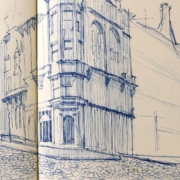
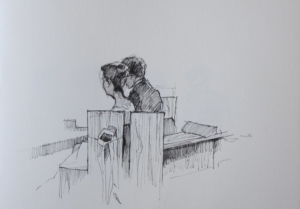
Drawing with pencil, the brand new workshop of Berlino Schule held by an American artist

Drawing with pencil is the brand new workshop that is going to start at Berlino Schule

On the 4th of October, starting from 8 p.m., Berlino Schule (Gryphiustrasse 23) will host the FIRST TRIAL CLASS of the drawing with pencil course – basic level – held by the American figurative painter Nick Skoug.

For the first lesson, you’ll be required to bring one or more drawings in order to discuss them during the class. After it, the teacher will do a demo in order to show what you will be learning in the next sessions.

 If you would like to participate, please send an email to info@berlinoschule.com

COURSE DATES

After the first lesson, the course will take place every Thursday from 20 to 21:30 until the 15th of November. The lessons will be held in English. The price of the whole course amounts to 140€.

COURSE AIM AND STRUCTURE

Students will learn the basics of observational drawing. Topics covered will include: gesture, line, light and shade, light logic, perspective,and proportion. Each session will include a critique and feedback on student work. The course will conclude with an exhibition of the students’ work.

THE PROGRAMME

Introduction – Free trial class
For the first lesson, you will all look at a drawing that you have brought, the teacher will give some feedback and then do a demo for the rest of the class. This will demonstrate what you will be learning in the next sessions.

Lesson 1 – Gesture

This lesson will focus on basic sketching, and capturing the gesture, or ‘feeling’, of what you are drawing. This is the first step that lays the foundation for a finished drawing, and gives a sense of life and movement to the subject.
Lesson 2 – Line
Lesson 2 will cover line drawing. You will do some exercises focusing on the lines and contours of the subject, training the eye to follow the outside edge and the ‘inner corners’.
Lesson 3 – Value
Following the line drawing, this lesson will focus on light and shade. You will look at the range of value (chiaroscuro), from the lightest to the darkest parts of the drawing, and how to organise them and put them down.
Lesson 4 – Light logic
Continuing on from the last lesson, this one will take a closer look at light and shade. You will now look at the different types of light and dark (highlights, cast shadows, reflected light, etc.).
Lesson 5 – Perspective and proportion
Finally you will look at perspective (one and two point) and how it figures into a drawing. You will also look at proportion, and how to effectively measure when drawing and show depth and space in 2D space.
Lesson 6 – Outside drawing
For the final lesson, you will go outside and do some drawing from life. This will be a great opportunity to apply everything you have learned in class in real space.

MATERIAL

Graphite drawing pencils (2B, 4B, 6B)
One kneaded eraser (Knetradiergummi)
One drawing pad (A2 size recommended) or a sketch pad

THE TEACHER

Originally from the Los Angeles area, Nick Skoug is a figurative painter that lives and works in Berlin. Before moving to Germany, he studied drawing and painting in California.
After receiving his BFA from the California State University, Long Beach, he came to Europe, attracted by the history and the art. This interest was encouraged by a brief study abroad in Florence and an ongoing study of the German language.
With a foundation in traditional observational techniques, he explores a variety of subjects. While these subjects are often contemporary, the past continually asserts itself as well.

TO SUM UP

From the 4th of October tll the 15th of November – each Thursday from 20 to 21:30. 
Berlino Schule, Gryphiusstr. 23, 10245 Berlin
Price: 140 €
Info and registration: info@berlinoschule.com
Learn German in Berlin

Studying Italian in Berlin in July and September: MILLE GRAZIE evening courses are about to start!

This summer you will have the opportunity to learn Italian in a friendly international atmosphere in Berlin!

Our students continue to come back to Berlino Schule time and time again and this is evident through the excellent five star reviews we have received (see Facebook and Google). These positive reviews are due to the consistent quality of our teaching and our competitively low prices. In fact, our students claim to have been positively stimulated by our international, young and dynamic atmosphere. Find our latest offers below which are all available in the upcoming months.

Our teaching method

Every course is taught in the target language, i.e. our teachers constantly speak the language that our students want to learn when delivering lessons or explaining concepts. Our method relies on the belief that a total immersion in the language is the most effective way to improve one’s level. Our teachers have regular meetings to ensure the consistency of our method, regardless of the level of each course.

Upcoming courses

In July

A1.1 Italian for beginners – MILLE GRAZIE I will begin on Tuesday 17th July and last until Friday 7th September. It will take place twice per week (Tuesdays and Fridays), from 18:00 to 20:30. Total amount of hours*: 48 (3h* x 16 classes)

B1.1 MILLE GRAZIE IV will begin on Monday 16th July and last until Monday 29th October. The classes will take place once per week, always on Mondays, from 18:00 to 20:30. Total amount of hours*: 48 (3h* x 16 classes)

In September

A1.1 Italian for beginners – MILLE GRAZIE I will begin on Wednesday 12th September and last until Wednesday 9th January. This course will take place once per week, every Wednesday, from 19:00 to 21:30. Total amount of hours*: 48 (3h* x 16 classes)

A1.2  MILLE GRAZIE II will begin on Tuesday 11th September and last until Tuesday 29th January. This course will take place every Tuesday, from 19:00 to 21:00. Total amount of hours*: 48 (2.5h* x 19 classes)

A2.1 MILLE GRAZIE III will begin on Friday 14th of September and last until Friday 4th January. The lessons will take place once per week, always on Friday, from 19:00 to 21:30. Total amount of hours*: 48 (3h* x 16 classes)

Prices

Each course costs €240.

Info & Registration

Should you need further information or want to register for one of the above-mentioned courses, feel free to contact us at info@berlinoschule.com !

Where

At Berlino Schule, in Gryphiusstr. 23, in Friedrichshain, one of the best, safest and most lively areas in Berlin. Moreover, the school is within walking distance of the East Side Gallery (the longest segment of the Berlin Wall still standing), one of the main touristic attractions of the capital city.

 *As defined by the Common European Framework of Reference for Languages (CEFR) and applied to all language schools, one hour of lesson consists of 45 minutes.